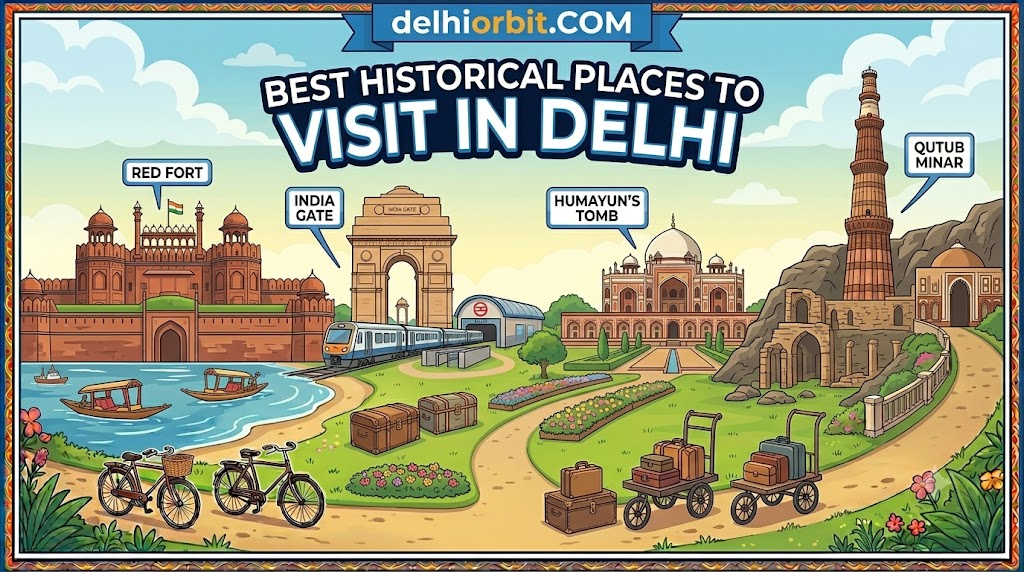
Delhi, the capital city of India, is a treasure trove of history and culture. From the magnificent Mughal forts and grand palaces to ancient temples and colonial-era buildings, Delhi narrates stories of empires, rulers, and the evolution of Indian architecture. First-time visitors can explore a blend of Mughal, Rajput, and British influences, making the city a fascinating destination for history enthusiasts. Whether you are a cultural traveler, a student of history, or simply curious, Delhi’s historical landmarks offer immersive, educational, and visually stunning experiences.
Real-World Use Cases
- Solo Travelers: Explore forts, tombs, and heritage streets at your own pace.
- Families: Educational trips to museums, palaces, and historical sites.
- Students & Researchers: Study Mughal architecture, British colonial heritage, and ancient Indian history.
- Cultural Explorers: Experience heritage walks, traditional arts, and historic markets.
- Photography Enthusiasts: Capture intricate carvings, monuments, and iconic cityscapes.
Evaluation Criteria for Visitors
- Historical Importance: The relevance of each site in Delhi’s history.
- Accessibility: How easily the location can be reached via public or private transport.
- Preservation Status: Maintenance, safety, and visitor-friendly facilities.
- Crowd Factor: Best times to avoid heavy tourist traffic.
- Cultural Value: Opportunities to experience local traditions, rituals, or artifacts.
Best For
Ideal for travelers seeking heritage, architecture, and cultural exploration in a metropolitan setting.
Not Ideal For
Not suitable for those looking for modern entertainment or nightlife-focused trips.
Top Historical Places to Visit in Delhi
1- Red Fort
Short description: A UNESCO World Heritage Site, the Red Fort is a Mughal masterpiece of red sandstone, symbolizing India’s rich history and architectural brilliance.
Key Features: Massive walls, Diwan-i-Aam, Diwan-i-Khas, Museums
Pros: Iconic, educational, centrally located
Cons: Can be crowded on weekends and public holidays
Visiting Info / Timings: 9:30 AM – 4:30 PM
Nearby Attractions / Tips: Visit Chandni Chowk nearby for local cuisine
2- Qutub Minar
Short description: A 73-meter tall Minaret built in the 12th century, representing Indo-Islamic architecture and historical significance.
Key Features: Red sandstone tower, Alai Darwaza, Iron Pillar
Pros: UNESCO World Heritage Site, photogenic, historical insights
Cons: Can be crowded; climbing restricted
Visiting Info / Timings: 7 AM – 5 PM
Nearby Attractions / Tips: Combine with Mehrauli Archaeological Park
3- Humayun’s Tomb
Short description: A 16th-century Mughal mausoleum, precursor to the Taj Mahal, set amidst beautiful gardens.
Key Features: Persian-style gardens, Marble work, Mughal architecture
Pros: UNESCO World Heritage Site, peaceful ambiance
Cons: Can get crowded during weekends
Visiting Info / Timings: 6 AM – 6 PM
Nearby Attractions / Tips: Visit nearby Nizamuddin Dargah
4- India Gate
Short description: A war memorial honoring soldiers, India Gate is a colonial-era landmark surrounded by lush lawns and fountains.
Key Features: Arch, Memorial inscriptions, Ceremonial grounds
Pros: Iconic landmark, open space, photography
Cons: No entry inside the arch
Visiting Info / Timings: Open 24 hours
Nearby Attractions / Tips: Evening walks are recommended
5- Jama Masjid
Short description: One of India’s largest mosques, built by Shah Jahan, showcasing Mughal grandeur and cultural vibrancy.
Key Features: Large courtyard, Minarets, Prayer halls
Pros: Spiritual atmosphere, historical architecture
Cons: Crowded during prayers and festivals
Visiting Info / Timings: 7 AM – 12 PM, 1:30 PM – 6:30 PM
Nearby Attractions / Tips: Explore Chandni Chowk and street food nearby
6- Lotus Temple
Short description: Though relatively modern, this Bahá’í House of Worship is an architectural marvel representing religious harmony.
Key Features: Flower-shaped design, Meditation spaces, Peaceful gardens
Pros: Tranquil, photogenic, spiritual experience
Cons: Not a historical monument in the classical sense
Visiting Info / Timings: 9 AM – 5 PM
Nearby Attractions / Tips: Visit nearby Kalkaji Temple
7- Rashtrapati Bhavan
Short description: The official residence of the President of India, this colonial-era palace showcases grand architecture and expansive gardens.
Key Features: Mughal Gardens, Ceremonial halls, Architecture
Pros: Stunning visuals, educational tours
Cons: Limited interior access
Visiting Info / Timings: Pre-booked tours recommended
Nearby Attractions / Tips: Explore nearby Connaught Place
8- Red Fort Vicinity Walk
Short description: Explore historic alleys, havelis, and markets around Red Fort for an immersive heritage experience.
Key Features: Heritage streets, Local crafts, Mughal architecture
Pros: Offbeat, cultural immersion
Cons: Can be crowded, uneven streets
Visiting Info / Timings: Morning or late afternoon recommended
Nearby Attractions / Tips: Enjoy local street food and shopping
9- Safdarjung Tomb
Short description: A Mughal-era mausoleum with exquisite gardens and serene surroundings.
Key Features: Gardens, Tomb structure, Mughal carvings
Pros: Less crowded, peaceful, photography-friendly
Cons: Limited public amenities
Visiting Info / Timings: 6 AM – 6 PM
Nearby Attractions / Tips: Combine with nearby Lodhi Gardens
10- Agrasen ki Baoli
Short description: An ancient stepwell in the heart of Delhi, offering insight into medieval water conservation and architecture.
Key Features: Stepwell architecture, Historic significance
Pros: Offbeat, peaceful, photogenic
Cons: Small site, restricted timings
Visiting Info / Timings: 9 AM – 6 PM
Nearby Attractions / Tips: Explore Connaught Place or Janpath markets
Comparison Table
| Place | Type | Crowd Level | Best Season |
|---|---|---|---|
| Red Fort | Fort / Mughal | High | Oct – Feb |
| Qutub Minar | Minaret / Mughal | Medium | Oct – Feb |
| Humayun’s Tomb | Tomb / Mughal | Medium | Oct – Feb |
| India Gate | Monument / Colonial | High | Oct – Mar |
| Jama Masjid | Mosque / Mughal | High | Morning / Festivals |
| Lotus Temple | Temple / Modern | Medium | Morning / Evening |
| Rashtrapati Bhavan | Palace / Colonial | Medium | Pre-booked Tours |
| Red Fort Vicinity Walk | Heritage Street / Offbeat | Medium | Morning / Evening |
| Safdarjung Tomb | Tomb / Mughal | Low | Morning / Evening |
| Agrasen ki Baoli | Stepwell / Heritage | Low | Morning / Evening |
Quick Visitor Checklist
- Wear comfortable walking shoes
- Carry water, camera, and sun protection
- Visit early mornings or weekdays to avoid crowds
- Respect religious and heritage sites
- Hire local guides for rich historical insights
FAQs
1- What is the best time to visit historical places in Delhi?
October to February offers pleasant weather and minimal humidity, ideal for sightseeing.
2- Are these sites family-friendly?
Yes, forts, tombs, and museums provide educational and safe experiences for families.
3- Do I need a guide for historical sites?
Guides are optional but enhance understanding at Red Fort, Qutub Minar, and Humayun’s Tomb.
4- Are there entry fees?
Most monuments outside are free, but museums and interiors of some sites have nominal fees.
5- How much time is ideal for visiting Delhi’s historical places?
A 3–4 day itinerary covers most of the top historical sites comfortably.
6- Is Delhi safe for solo travelers?
Yes, Delhi is generally safe; exercise normal precautions in crowded areas.
7- Can photography be done inside monuments?
Photography is allowed in most exteriors, with some restrictions inside museums and religious spaces.
8- Are heritage walks available in Delhi?
Yes, guided walks in Old Delhi, Chandni Chowk, and Mehrauli areas are popular.
9- Which historical sites are offbeat?
Agrasen ki Baoli, Safdarjung Tomb, and Red Fort Vicinity Walk are less crowded gems.
10- Can monuments and museums be combined in one itinerary?
Yes, for example Red Fort, Humayun’s Tomb, and Rashtrapati Bhavan can be visited together efficiently.
Delhi’s historical landmarks provide a rich blend of Mughal, colonial, and medieval heritage, making it ideal for cultural and educational tourism. Exploring both iconic and offbeat sites allows visitors to experience the depth, architecture, and stories of India’s capital, leaving them with unforgettable memories.