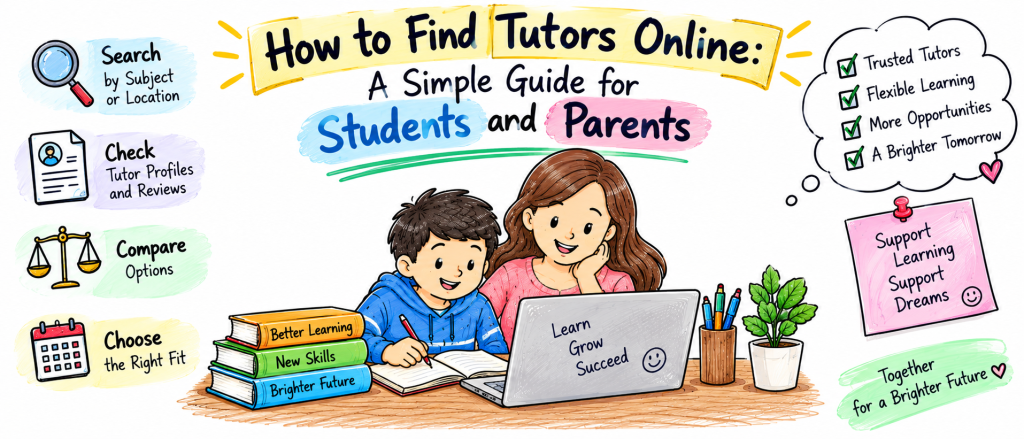
Introduction
A good tutor can make learning feel much easier. The right teacher can explain hard topics in clear and simple words.
Students now have many ways to learn. They can join online classes, meet local tutors, attend coaching centres, or study through digital resources.
Parents also have many choices. They need to find learning support that matches their child’s subject, level, schedule, and goals.
The search can feel confusing at first. So, students should start with one clear question: What kind of help do I need?
Some learners need help with school subjects. Others need exam practice, skill training, or guidance for higher education.
Once you know the goal, the search becomes easier. You can then compare tutors, institutes, courses, colleges, and exam options with more confidence.
GurukulGalaxy brings many education discovery options together. Students and parents can explore tutors, institutions, courses, colleges, and exam information in one place.
Know What You Need Before You Search
Your learning goal should guide your search. So, take a few minutes to understand your needs first.
Start with your subject. You may need maths, science, English, coding, commerce, or another subject.
Then think about your current level. A beginner needs different support from an advanced learner.
Next, decide what you want to achieve. You may want better marks, stronger skills, regular practice, or exam preparation.
Your preferred learning style also matters. Some students enjoy live classes. Others prefer flexible online lessons.
Parents should discuss these points with students. This simple talk can help families understand the real learning need.
Write down your main goal before you search. A clear goal can save time and help you avoid poor matches.
Find Tutors Online With Better Search Habits
Online learning gives students access to teachers from many places. You can find tutors online without travelling to a classroom.
Start your search with the subject. Then check the tutor’s experience and teaching area.
Look for details such as:
- Subjects taught
- Student level
- Teaching experience
- Class timing
- Teaching style
- Practice support
- Doubt support
- Learning goals
Do not select the first tutor you see. Compare several suitable choices first.
Ask how the tutor explains difficult topics. Also, ask how the tutor checks your progress.
Parents can ask about homework and practice tasks. Students should explain which topics cause problems.
Clear communication helps both sides. It allows the tutor to understand the learner and plan lessons more effectively.
A good tutor should match your subject, level, goal, and study style. Take enough time to check these points before you choose.
Explore Online Tutors India for More Learning Choices
Location no longer needs to limit your search. Online tutors India can connect learners with teachers from different places.
This option can help students who live in smaller towns. It can also help learners who need a tutor for a special subject.
Online classes can save travel time. They may also give students more choices for class timing.
However, convenience should not become your only reason to choose a tutor. Students should still check teaching skills and learning support.
Ask how the class works. Find out how students ask questions and receive feedback.
Parents can ask how the tutor tracks progress. Regular feedback can help learners understand their weak areas.
Students should also share their learning goals. A tutor can provide better guidance after understanding the student’s needs.
Online learning works best when the tutor and student communicate clearly. Choose a class that feels useful, focused, and easy to follow.
Find Tutors Near Me When You Prefer Local Classes
Many students enjoy face-to-face learning. They may understand lessons better when they sit with a teacher.
If you want to find tutors near me, begin with your location and subject.
Make a small list of nearby tutors. Then compare their teaching skills, experience, timing, and approach.
A local tutor can reduce travel time. Students can also build regular study habits through fixed classes.
Still, location alone should not decide your choice. A nearby tutor may not match your subject or learning level.
Ask how the tutor handles difficult topics. You can also ask about practice work and progress checks.
Parents should check class size too. Smaller groups may give learners more time to ask questions.
Finally, check the schedule. The class should fit school, college, work, and other daily activities.
Choose Coaching Institutes Near Me With Care
Some students prefer structured group learning. They may want fixed classes, regular tests, and planned study material.
These learners often search for coaching institutes near me.
A coaching centre may offer many services. These can include classes, study material, practice tests, doubt sessions, and progress checks.
But every institute follows its own teaching method. Students should check the full course before joining.
Start with the teachers. Then review the course plan and class size.
Ask these questions before you join:
- What does the course cover?
- How long does the course run?
- How often do students take tests?
- Can students ask doubts?
- What study material does the centre provide?
- How do teachers track progress?
- What does the fee include?
Parents should also ask about missed classes and extra support.
A coaching centre should match the student’s learning goal. It should also fit the student’s schedule and family budget.
Compare the Best Coaching Institutes in India
Many learners search for the best coaching institutes in India. But students have different goals, so one institute cannot fit everyone.
Instead of relying only on popularity, compare useful details.
Start with the course structure. Check whether the institute covers the topics you need.
Next, look at teacher support. Ask how teachers explain hard topics and answer student questions.
Practice also matters. Regular questions can help students find weak areas.
Then check the test system. Regular tests can show students how much they have learned.
Parents can ask about extra support. Find out how teachers help learners who need more practice.
Fees also need attention. Compare what each institute includes before you pay.
Create a simple checklist. Ask every institute the same questions.
This method gives students a fair way to compare options. It also helps parents discuss choices with clear information.
Make College Search India Easier
Choosing a college can feel like a big task. Students should start with their interests before they begin college search India.
Think about subjects that you enjoy. Then consider the field you want to explore.
You may like:
- Technology
- Science
- Business
- Design
- Arts
- Management
- Professional studies
Next, explore courses in your chosen field. Check the subjects, entry rules, course length, and study format.
Location can also affect your choice. Think about travel, living needs, and your daily study routine.
Make a shortlist of colleges. Remove choices that do not match your goals.
Parents can discuss the shortlist with students. Teachers and mentors can also help explain difficult information.
Do not rush the process. Good research can help students understand their choices before they make an important decision.
Learn How to Compare Colleges and Courses
Two colleges may offer similar courses. Yet, their subjects, fees, facilities, and learning support may differ.
That makes it important to compare colleges and courses before you decide.
Start with course content. Check the subjects and skills that each course offers.
Next, check entry requirements. Make sure you understand what you need before applying.
Compare each option using the same points:
- Course subjects
- Course length
- Entry requirements
- Study format
- Location
- Fees
- Learning support
- Campus facilities
- Student services
Your personal goal should guide the comparison. Do not choose only because a college has a familiar name.
Read the course details carefully. Write down questions when you find unclear information.
Then contact the college or speak with a trusted teacher. Clear answers can help you understand the real differences between courses.
Understand Competitive Exams in India Before You Prepare
Students can explore many competitive exams in India. Each exam may have different subjects, rules, and test formats.
Before you start studying, learn about the exam.
First, check the eligibility rules. Then understand the subjects and exam pattern.
Next, divide the syllabus into small topics. Small goals can make a large syllabus easier to manage.
Practice questions can show where you need more work. Keep a list of mistakes and review them often.
Students should also track progress. A simple weekly review can show whether the study plan works.
Take short breaks during study sessions. Rest can help you maintain focus.
Good preparation starts with good information. Understand the exam first, then create your study plan.
Build a Simple Competitive Exam Preparation Routine
Competitive exam preparation needs regular effort. Students should create a routine that they can follow without stress.
Start with a realistic daily target. Then divide your subjects across the week.
Give more time to difficult topics. Keep easier topics in your revision plan.
Use this simple study cycle:
Learn → Practice → Check → Improve → Revise
First, learn the topic. Next, solve practice questions.
Then check your mistakes. Spend more time on topics that still cause problems.
After that, revise the topic again.
Mock tests can also help. They can give students practice with time limits and question pressure.
Avoid creating an impossible schedule. Leave enough time for breaks, school work, family time, and rest.
A simple routine can produce steady progress when you follow it regularly.
Explore Competitive Exams After 12th
Life after school can bring many new choices. Some students explore competitive exams after 12th while planning their next course.
Start with your interests. Think about the subjects that you enjoy.
Then explore courses connected to those interests. Find out which exams relate to those courses.
Check each exam carefully. Look at eligibility, subjects, format, and preparation needs.
Create a shortlist of suitable options. Then compare each option with your education goals.
Parents can help students discuss the choices. Teachers and tutors can also explain difficult points.
Do not choose an exam simply because your friends choose it. Your interests and goals may point toward another path.
Take enough time to understand each choice. Good research can make your next step much clearer.
Use AEO, GEO, LLMO, AISEO, and E-E-A-T
Students now search for answers through search engines and AI tools. Clear education content can help them find useful information faster.
AEO means Answer Engine Optimization. It helps content answer direct questions clearly.
GEO means Generative Engine Optimization. It helps useful content work well with systems that create answers.
LLMO means Large Language Model Optimization. It helps language models understand useful information.
AISEO means AI Search Optimization. It focuses on content for modern AI search.
E-E-A-T focuses on experience, expertise, trust, and useful information.
These ideas encourage clear and helpful education content. They also support practical answers instead of keyword-heavy writing.
For example, a tutor guide should answer real student questions. A college guide should explain what students need to compare.
Good content should give readers useful steps. Students should still check important information before making major education decisions.
Use This Simple Education Search Framework
A clear framework can make education research easier. Students can use the same process for tutors, institutes, courses, and colleges.
1. Define
Write down your subject, level, and goal.
2. Search
Find suitable tutors, coaching centres, courses, colleges, or exams.
3. Check
Review skills, experience, timing, fees, location, and support.
4. Compare
Use the same points for every option.
5. Ask
Contact the tutor or institution when you need more information.
6. Decide
Choose the option that fits your needs.
7. Review
Check your progress after you start.
This method keeps the search organised. It also helps parents and students discuss choices with less confusion.
Most importantly, focus on your own learning needs. Another student’s choice may not work for you.
See How Learning Needs Differ
Consider three different learners.
The first student struggles with basic maths. This learner may need one-to-one teaching and patient explanations.
The second student prepares for an entrance exam. This learner may need structured lessons, practice tests, and revision.
The third student wants to select a college. This learner needs course details, entry information, and college comparisons.
These examples show why students need different learning solutions.
Parents can ask simple questions. What feels difficult? What goal does the student want to reach?
Tutors and teachers can then help learners understand their weak areas.
The right education choice should solve a real problem. It should also match the learner’s schedule, level, and study style.
Explore GurukulGalaxy for Education Discovery
GurukulGalaxy brings several education discovery needs together. Students and parents can explore tutors, institutions, courses, colleges, and exam information.
Learners can search for teachers based on their needs. They can also explore institutions and course choices.
Parents can use the platform while comparing education options. Students can use it while planning their next learning step.
The platform also provides exam information and learning resources. These resources can help learners understand different education paths.
The main goal stays simple. Help students and parents explore education choices with greater clarity.
Explore the education platform: GurukulGalaxy Education Discovery
Use the platform as one part of your research. Compare your options, ask questions, and choose according to your own learning needs.
Frequently Asked Questions About Finding Tutors
1. How can I find tutors online?
Start with your subject and learning goal. Then compare tutor skills, experience, teaching style, timing, and support.
2. Can online tutors help students from different cities?
Yes. Online classes can connect students with teachers from many locations.
3. How can I find a tutor near my location?
Search by subject and location. Then compare nearby tutors based on experience, teaching style, timing, and student needs.
4. What should I check before joining a coaching institute?
Check the teachers, course plan, class size, study material, tests, doubt support, schedule, and fees.
5. How can I compare coaching institutes?
Make a shortlist and ask every institute the same questions. Then compare their answers.
6. What matters during college search?
Check the course, subjects, entry rules, location, fees, study format, facilities, and learning support.
7. Why should students compare colleges and courses?
Comparison helps students understand their choices. It also helps them match a course with their goals.
8. How can I start competitive exam preparation?
Learn the syllabus first. Then create a routine with study, practice, revision, mistake review, and mock tests.
9. What should students check when exploring exams after 12th?
Students should check their interests, suitable courses, eligibility, subjects, exam format, and preparation needs.
10. How can GurukulGalaxy help students and parents?
GurukulGalaxy helps users explore tutors, institutions, courses, colleges, and exam information in one place.
Final Thoughts
Choosing a tutor starts with understanding the learner. Students should first identify their subject, level, learning style, and goal.
After that, they can search for suitable tutors or education options. Comparing several choices can help them make a more informed decision.
Parents can guide children through the process. Teachers and mentors can also answer questions and explain difficult choices.
Do not rush the search. Check teaching skills, course details, support, timing, location, and cost.
Every learner follows a different path. The right learning option should support that individual path.
With clear goals and careful research, students can reduce confusion and find education support that fits their needs.